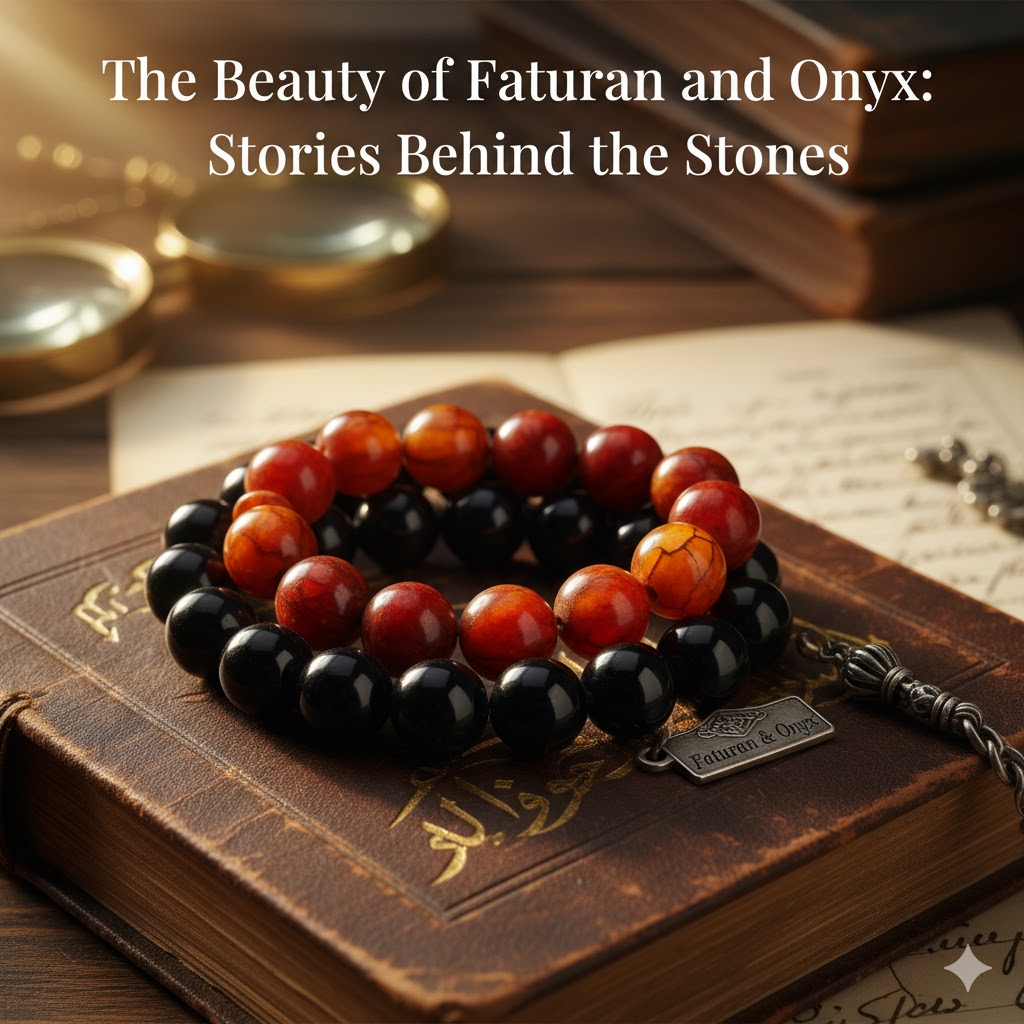
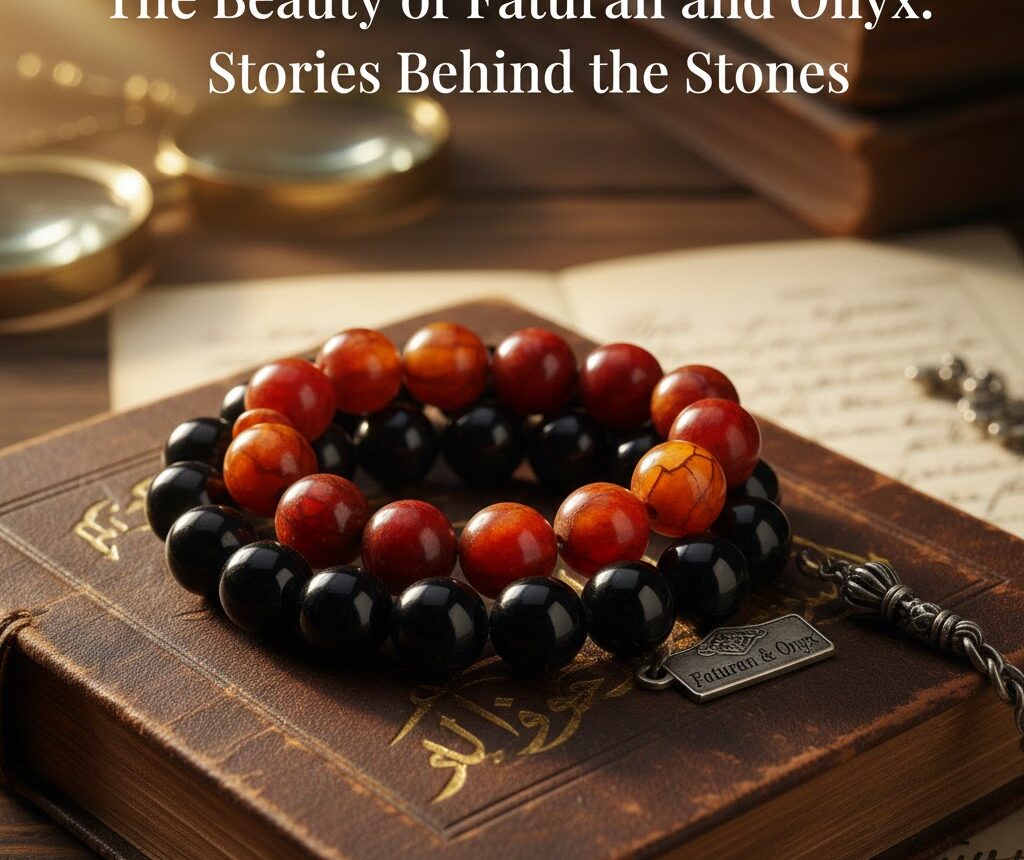
Faturan and onyx create one of the most distinctive combinations in men’s jewelry: warm, character-rich resin beads alongside the deep contrast of polished black stone and the brightness of sterling silver.
Although they are often presented together in rosaries, bracelets, pendants, and gift sets, Faturan and onyx are very different materials. Understanding their origins, appearance, symbolism, and care requirements helps you choose jewelry with confidence—and appreciate the craftsmanship behind every piece.
Faturan and Onyx at a Glance
- Faturan: a historic trade name associated with early phenolic resin, especially valued in bead and prayer-bead traditions.
- Onyx: a banded variety of chalcedony, widely used in jewelry for its polished surface and dramatic dark appearance.
- Sterling silver: adds brightness, structure, separators, clasps, and personalised details to both materials.
- Best use: meaningful rosaries, bracelets, pendants, rings, and personalised gifts.
What Is Faturan?
Historically, Faturan was a trade name associated with an early thermosetting phenolic resin developed in the first decades of the twentieth century. The material became especially important in the Eastern Mediterranean and Middle Eastern bead trade, where artisans valued its rich colours, density, polish, and suitability for carving.
Over time, the word “Faturan” began to be used more broadly in the bead market. It may describe vintage phenolic material, collectible prayer beads, or modern resin beads inspired by traditional Faturan colours and patterns. Because terminology varies, buyers should read each product description carefully rather than assuming every item is antique or made from the same historical formula.
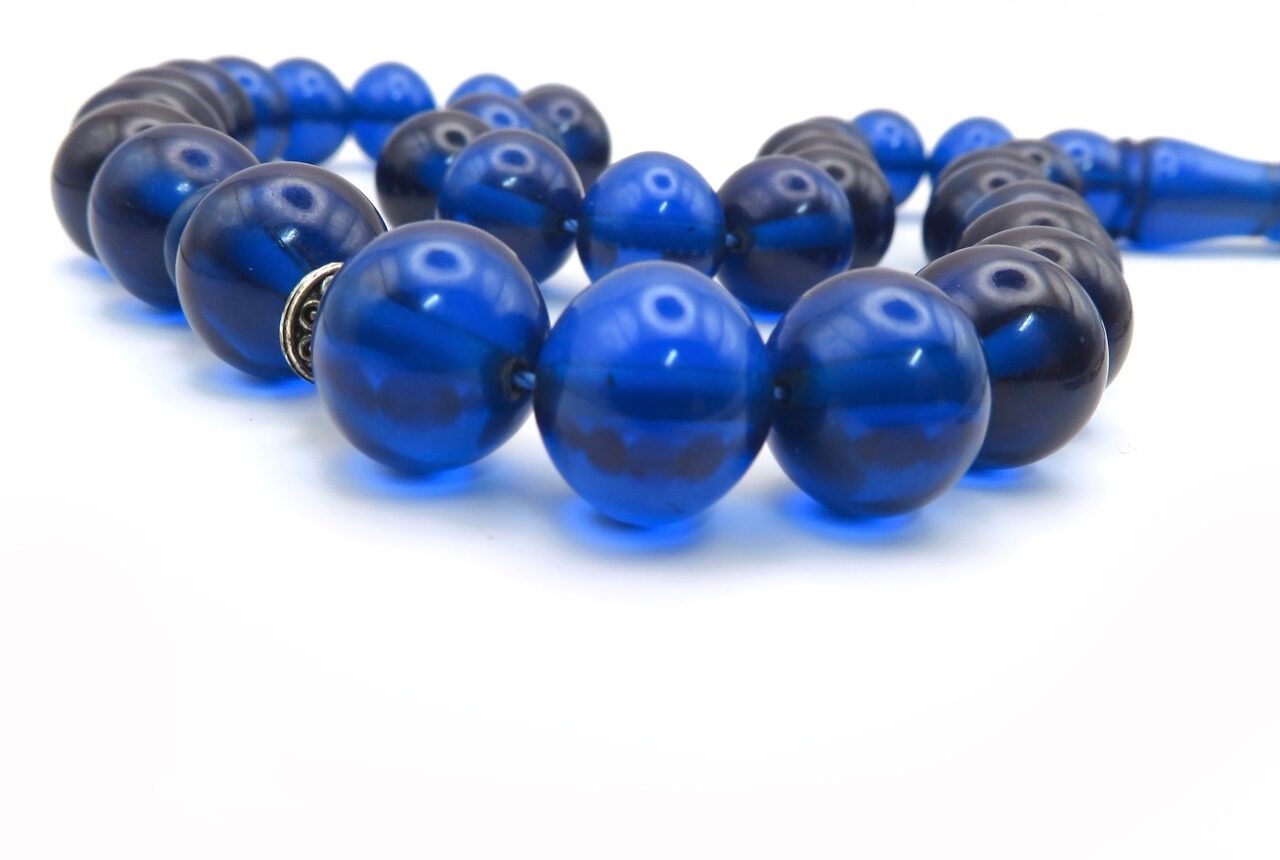
Its visual appeal comes from warmth and depth. Depending on the piece, Faturan-style beads may appear amber, cherry red, honey-coloured, marbled, or deep blue. Surface oxidation and regular handling can also influence the appearance of older phenolic beads, contributing to the patina collectors appreciate.
What Is Onyx?
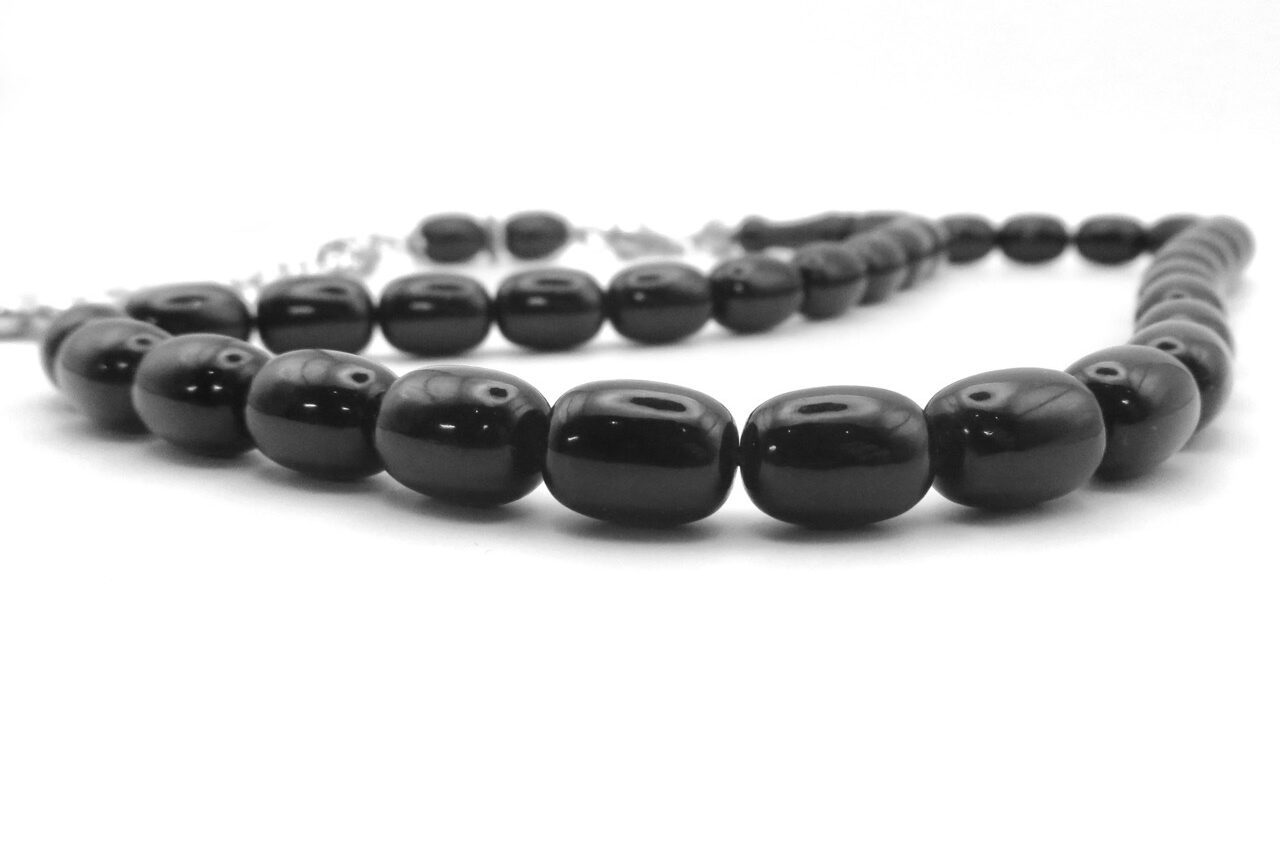
Onyx is a banded variety of chalcedony, a microcrystalline form of quartz. In jewelry, black onyx is especially popular for rings, beads, pendants, cufflinks, and silver settings because its dark polished surface creates a strong contrast with bright metal.
Not all black onyx looks identical. Natural banding may be subtle, and much of the black onyx sold commercially is treated to achieve a more uniform colour. Treatment does not automatically make a stone unsuitable for jewelry, but clear product information is important when origin or treatment matters to the buyer.
Across different cultures and jewelry traditions, onyx has been associated with confidence, focus, protection, and inner strength. These are cultural and symbolic associations rather than medical claims, but they help explain why black onyx remains popular in meaningful men’s jewelry and personalised gifts.
Faturan vs Onyx: What Is the Difference?
Faturan
- Historic resin-based bead material
- Often warm, translucent, marbled, or richly coloured
- Strong connection to rosary and bead craftsmanship
- Terminology can vary across modern sellers
- Best protected from heat and harsh chemicals
Onyx
- Variety of chalcedony in the quartz family
- Known for a smooth, dark, polished appearance
- Used in rings, pendants, beads, and silver settings
- Black colour may be natural or treated
- Should be protected from scratches and chemicals
Why Faturan, Onyx, and Sterling Silver Work Together
The combination succeeds because each material contributes something different. Sterling silver reflects light and defines the structure. Onyx adds visual weight and calm contrast. Faturan-style beads introduce colour, warmth, and a connection to traditional bead craftsmanship.
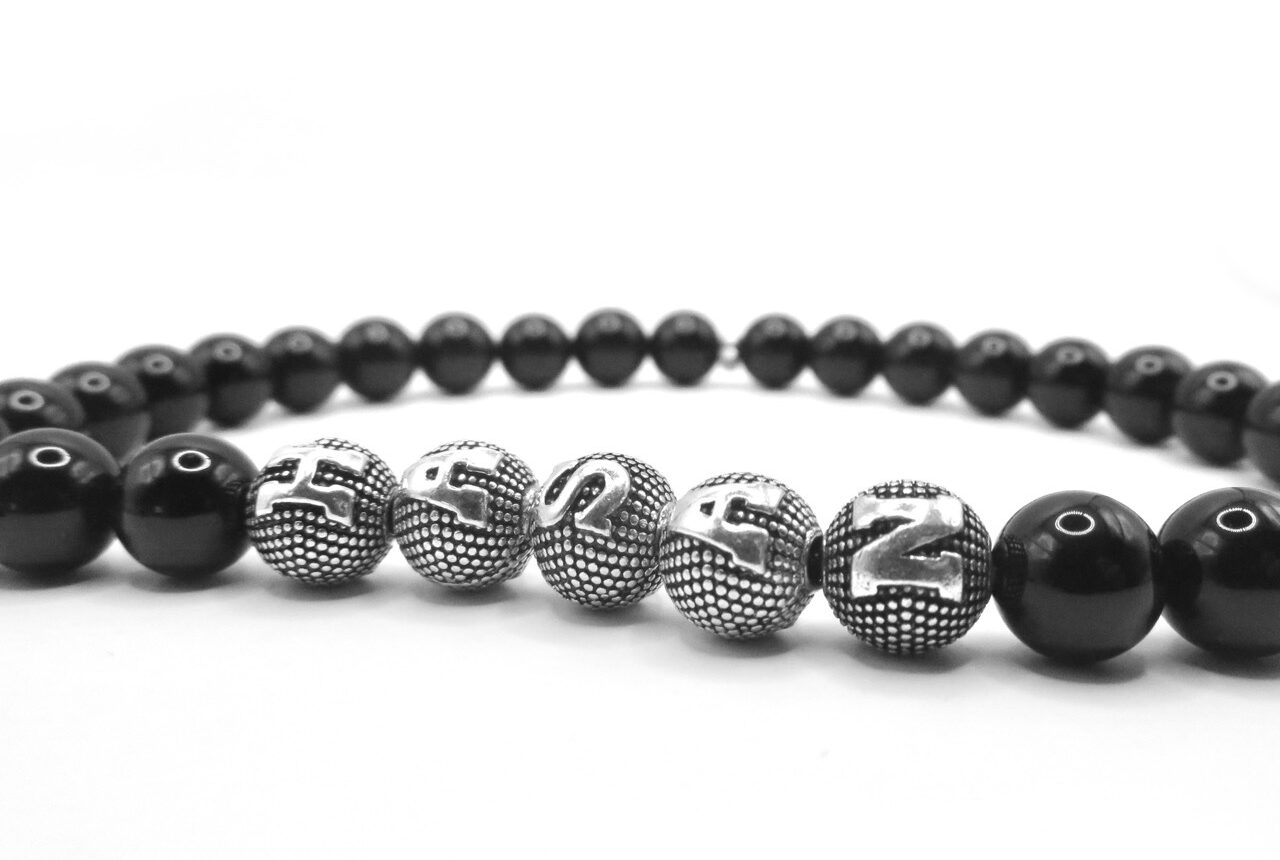
Silver separators can create rhythm between beads, while engraved letter beads, names, initials, or dates add personal meaning. In a bracelet or rosary, these details help turn separate materials into one coherent design.
The strongest designs do not overload the piece. They allow the bead colour, silver accents, and personalisation to support one another. This balance makes the jewelry suitable for daily wear, spiritual use, or gifting.
Symbolism and Meaning
Faturan
Often associated with heritage, craftsmanship, warmth, faith, and transformation.
Onyx
Traditionally associated with confidence, focus, protection, and emotional balance.
Silver
Frequently connected with clarity, reflection, craftsmanship, and enduring value.
Symbolism is personal. One wearer may choose onyx for its bold appearance, while another values its traditional associations. A rosary may represent devotion, a bracelet may mark a milestone, and an engraved piece may preserve a name or date. The meaning comes from the relationship between the object and its owner.
How to Care for Faturan, Onyx, and Silver Jewelry
Essential Care Tips
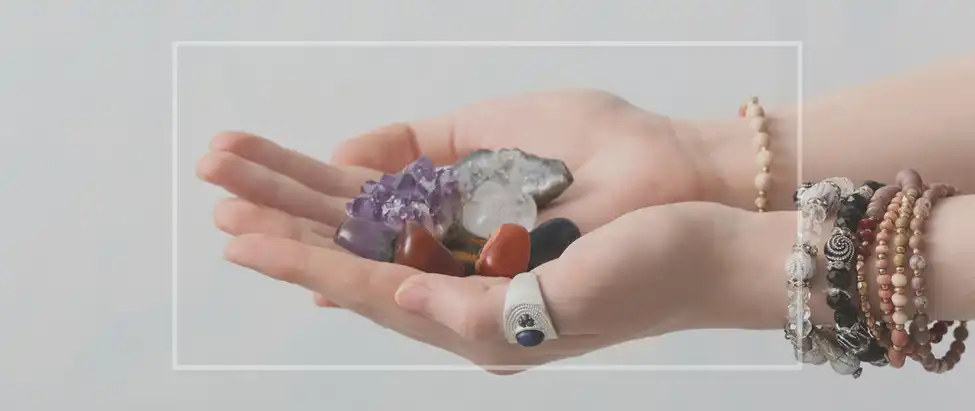
- Avoid harsh chemicals: keep perfume, bleach, chlorine, household cleaners, and strong solvents away from beads, stones, and silver.
- Avoid excessive heat: resin-based beads should not be exposed to high temperatures or prolonged direct sunlight.
- Store separately: use a soft pouch or divided jewelry box to reduce scratching and prevent beads from striking harder pieces.
- Wipe gently: use a clean, soft cloth after handling or wearing the jewelry.
- Use minimal moisture: if necessary, clean carefully with a slightly damp soft cloth, then dry thoroughly. Avoid prolonged soaking.
- Polish silver selectively: use a suitable silver cloth on metal components without rubbing aggressively against beads or stones.
Older, treated, engraved, or mixed-material pieces may require different care. When uncertain, ask the seller or jeweler before using liquid cleaners, ultrasonic equipment, abrasive polish, or home cleaning mixtures. For broader guidance, read the Elementswinkel silver jewelry care guide.
How to Choose the Right Faturan or Onyx Piece
- Choose the purpose: daily wear, prayer, collecting, gifting, or personalisation.
- Confirm the material description: check how the seller describes Faturan, resin, onyx, treatments, and silver content.
- Inspect the finish: look for smooth beads, secure threading, strong clasps, clean separators, and precise engraving.
- Consider size and weight: bead diameter and overall weight affect comfort and handling.
- Select meaningful details: names, dates, initials, Arabic engraving, and silver letters can personalise the design.
- Ask questions: contact the seller when age, treatment, origin, or care requirements are important to your decision.
Explore Faturan, Onyx, and Men’s Rosaries
Discover meaningful prayer beads, men’s silver jewelry, and personalised creations selected for craftsmanship, character, and gifting.
Frequently Asked Questions
Is Faturan a natural gemstone?
No. Historically, Faturan was associated with an early phenolic resin used for beads and decorative objects. The term is now used in different ways across the bead market, so product-specific descriptions matter.
Is black onyx always naturally black?
No. Black onyx and related chalcedony may be treated or dyed to create a consistent dark colour. Ask for disclosure when natural colour or treatment status is important to you.
Can Faturan and onyx jewelry be personalised?
Yes. Personalisation can be added through silver letters, names, initials, dates, symbols, pendants, or engraved metal components, depending on the design.
Can I clean onyx and Faturan with silver polish?
Silver polish should be used only on suitable silver components and kept away from beads and stones unless the product maker confirms otherwise. A soft cloth is the safest starting point for mixed-material jewelry.
Faturan, onyx, and silver each bring a different character to jewelry. When materials are described honestly, combined thoughtfully, and cared for correctly, the result can connect craftsmanship, personal style, and meaningful tradition in one lasting piece.